Cumberland is commenting on the recent volatility and potential opportunities to take advantage of it.
For further information about Cumberland, please visit Cumberland website here.
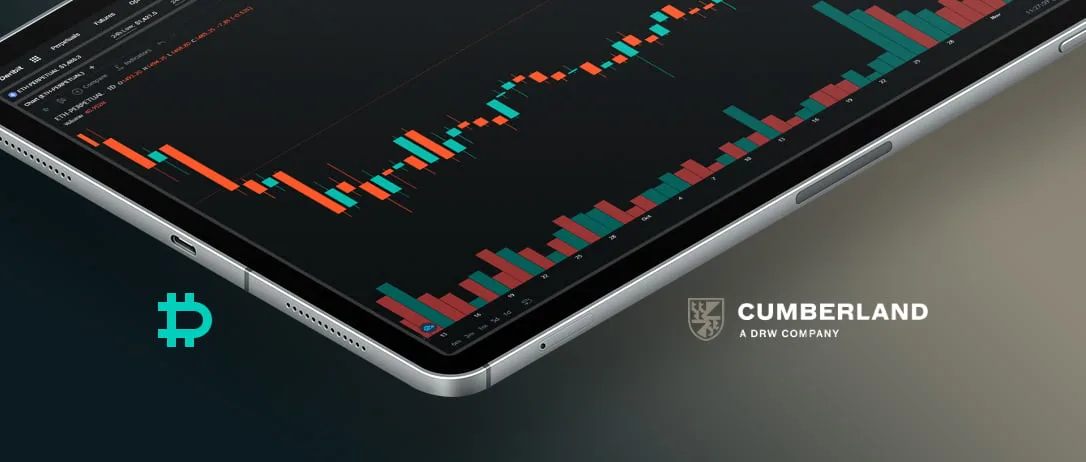
Last week was crypto’s most volatile of the year, with BTC realized volatility around 95% over the past eight days and most alts between 120% and 160% realized vol. The end result of all of this movement was fairly minimal; after a range of more than 25%, BTC ended the period down only 3%. Alts, on the other hand, performed much worse, with ETH down 12%, and most other alts distributed around that, from down 4% in some cases to down 15% in others.
That BTC would (mostly) recover, and alts would lag felt predictable. Alts have struggled all year: we are, in fact, in a bear market if your portfolio includes nearly any asset outside of BTC and ETH. Liquid crypto investors this year have been spoiled for choice: there are an ever-increasing number of L1 tokens, L2 tokens, DeFi governance tokens… every sector has seen a steady uptick in terms of the number of token choices available to investors. At the same time, while crypto has seen an overall capital inflow in 2024, it’s been exclusively into exchange-traded products, and therefore completely consumed by BTC and ETH. We’re now firmly in the second half of the year, and even some of the former best names in crypto are languishing, from a price perspective.
Solana has been one of the exceptions, up 40% on the year and almost impacted through last week. SOL’s separation from the rest of the L1/L2 pack has been noticeable all year; over the past twelve weeks, it’s had only a 73% correlation with BTC, much lower than ETH, AVAX and NEAR, which are all around 82-85%. SOL’s separation could be attributable to a few different factors. First, it stands the best chance of being adopted into the “institutional” class, especially if it is the next token to get traction on an ETF. Second, however, it has developed a DeFi ecosystem that is not just robust, but actively used. According to Artemis, Solana typically has between 1.5m and 2m daily active users; most chains have between 500k and 1m (though Near has more, with around 2.5m-3m, which is interesting and bears investigation). PayPal’s stablecoin, PYUSD, now has as much AUC on Solana ($350m) as it does on Ethereum, after only about six weeks.
One of the oldest pairs trades in crypto is the XRP-XLM pair, which tend to correlate even when it doesn’t make sense. Both coins were early movers with payment use-cases, and both have been around for a while, so the coins have always tracked closely. This sometimes leads to unexpected outcomes. Last week, Ripple settled its long-standing case with the SEC, agreeing to pay a $125m fine, which was broadly considered a win by the market: XRP rallied nearly 20% immediately following the headline. Due to the laziness of pairs trading, XLM also rallied. Intriguingly, XRP has retraced about half of its move since the headline, while XLM has held up, with the unintuitive result that XLM has outperformed XRP over the past week.
 Cumberland
 Block Scholes